Showing posts with label hybrid. Show all posts

Monday, March 1, 2021

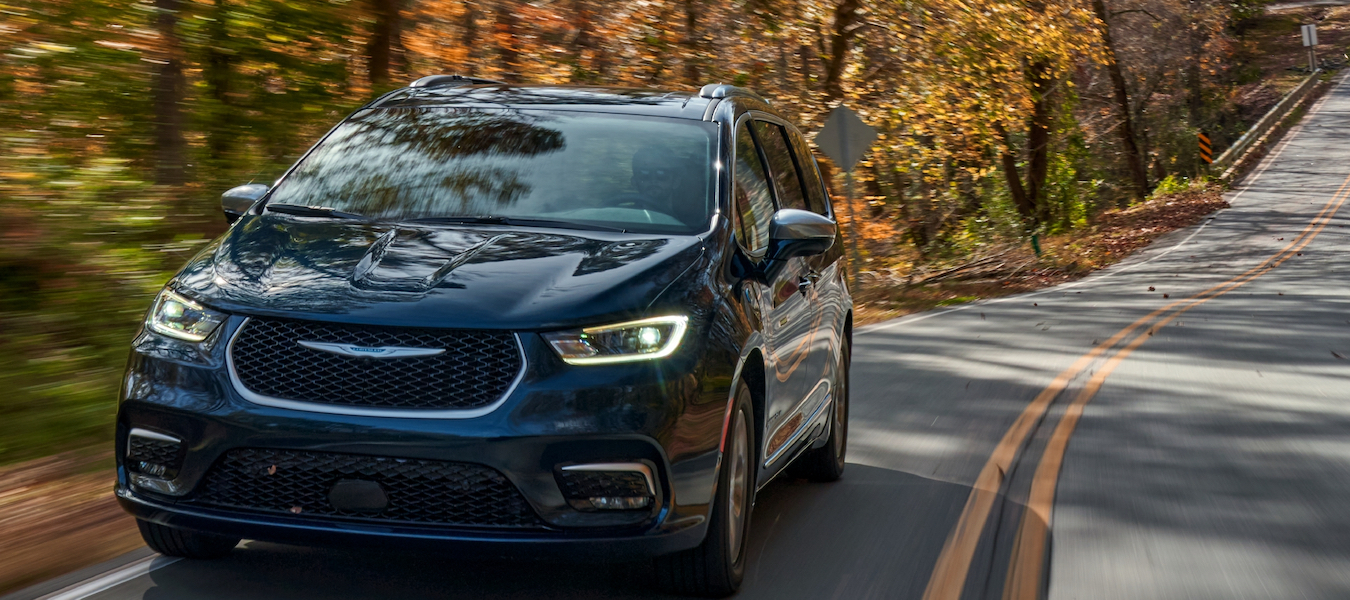
2021 Chrysler Pacifica Re-Energizes Minivan Market


Originally Published 2/14/21 on RPM News Weekly ~

The Chrysler Pacifica minivan brings a long history of refinement to a new height with the refreshed 2021 model. Loaded with more standard content including 14 new-as-standard safety features; available in all-wheel drive gasoline versions; offering a plug-in hybrid variant; and presenting an ultra-luxurious new Pinnacle trim, this is a minivan that can surely beckon families away from impractical SUV fixations. 

Tuesday, March 3, 2009

Will Changing Times Change The Auto Industry?

We’ve come a long way in a short 100 years with the automobile. Out of the minds of a few lone inventors and a handful of small bicycle shops and carriage manufacturers, emerged an automobile industry that has developed into a powerhouse of production and employment whose survival now seems inexorably linked to the success of world economies.
But as the big players in this industry stumble in the current mess of financial woes, one wonders if the playing field could fast be redefined by smaller start-up companies.
If so, will these new players need to make a gigantic leap across the entire last century of industrial growth in one jump? Or, will they be something that functions completely different?
Will Detroit’s automakers need to redefine their manufacturing model? Can corporations so massively industrialized become agile enough to rapidly alter production in the face of sudden changes in demand?
Each year, automakers offer consumers improvements and new features in their product lines. The evolution of the automobile into today’s lineup of vehicles has shown remarkable progress in safety, performance, function and durability.
But there’s a difference between what’s new and what’s really new. A new feature does not fundamentally change the concept of a vehicle; a new model doesn’t necessarily mean a totally new automotive entity. A new design is not a new way of bringing cars to market.
When Honda introduced North America to its first production gasoline/electric hybrid vehicle, the Insight, a decade ago, that was something really new. In both design and means of propulsion, the Insight defied convention. Toyota wasted no time in bringing out its hybrid, the Prius, soon afterwards.
The original two-seater Insight was in production until 2006 and is making its way back to market this April as a 2010 five-passenger model. Meanwhile, Toyota has launched a redesigned Prius that is bigger and more powerful.
American automakers were slow to respond to the hybrid challenge and have been playing catch-up since. At times, there were indications that they might not even embrace the technology at all.
Times have changed.
Ford tiptoed into the hybrid market (the first domestic automaker to do so) with a version of the 2006 Escape SUV. Now, it is set to go gangbusters with the Fusion Hybrid – a more mainstream type of automobile that will be in showrooms this spring. Looks like Ford wants a share of the Toyota Camry Hybrid market.
Bob Bancroft, owner of Ashley Ford in New Bedford, Massachusetts described the new Fusion Hybrid as the highest mileage hybrid made in America - chalking up a mileage rating of 41 mpg.
High-mileage is the new mantra.
“Ford’s CEO (Alan Mulally) has made a promise that every vehicle will get better fuel economy than the vehicle it replaces,” noted Mr. Bancroft. “That’s the big story.”
Good news for sure. Ford is showing good effort to change the perception that big automakers are not making the cars people want.
But big automakers worldwide may soon find their foundations being rattled by an innovative start-up company, Local Motors, located in Wareham, Massachusetts. The company describes itself as “the first disruptive entrant in the US automotive industry in decades.”
Local Motors is not looking to mass produce vehicles. If they can build 2,000 vehicles per year at each of eventually 25 locations, that would please company founder Jay Rogers. It will be proof that their idea of “challenging the paradigm of highly centralized manufacturing, embattled dealerships and dispersed service locations,” is the way to go.
Ultimately, it could change the way consumers buy (and think about buying) their vehicles.
“The world changes faster than we develop cars,” observed Mr. Rogers. “It doesn’t need to be that way.”
He expects to turn heads by demonstrating that there is a different and faster way to get the cars people actually want out to market than the way it is currently being done.
But comparing Local Motors to the small manufacturers at the dawn of the auto age is hardly accurate according to Mr. Rogers. There’s a lot of automotive infrastructure that’s developed and capable of producing high quality, off-the-shelf parts and supplies most of which is now going to non-OEM (Original Equipment Manufacturer) purchasers. This is what Local Motors plans to tap into instead of manufacturing automotive parts themselves.
“You can stand on the shoulders of product development,” explained Mr. Rogers.
Easy access to everything from engines to brakes is an advantage previous start-ups like the ill-fated DeLorean Motor Company did not have thirty years ago.
Aiming to produce lower-weight vehicles that are designed by an online consensus of car enthusiasts (a internet savvy technique called crowd-sourcing), built from off-the-shelf parts and marketed to specific geographic regions, Local Motors’ business model completely redefines the way cars get to market.
But how will selling 50,000 cars shake up the Detroit automotive establishment that looks at sales in the millions per year.
“We hope to be a tipping point,” said Mr. Rogers.
He’s not alone in that wish.
Dean Kamen, the inventive creator of the Segway personal transporter is busy developing an electric vehicle called the Revolt which utilizes his version of a type of external combustion engine called the Stirling (after Robert Stirling, its 19th century inventor) to provide an electrical assist to the vehicle’s batteries.
Even though Kamen’s DEKA Research & Development Corp. hopes to have a production version of the vehicle on the market in 2 years, his goal may be less that of becoming an automaker and more of becoming the inventor that paves the way for other automakers to use the technology.
The Revolt design is based on the Ford Think which was cancelled in 2002. Ford sold its stock in the company and ultimately the Think brand wound up in Norway and today is producing electric cars for the European market.
Think describes its vehicles as, “emission free and three times as energy efficient as the cars used today.” The Think City model is designed to muster 62 mph with a range of 126 miles on a charge.
But Jim Lutz, president of Alden Buick Pontiac GMC Truck in Fairhaven, Massachusetts is not holding out hope that these new smaller companies will last.
“If you look at the history of startups, it’s dismally bad,” he observed. “Even craft businesses have gone by the wayside.”
For him, the car industry, in terms of its business sophistication, ranks just below the aircraft industry. Starting a car-making business from scratch may be just too formidable a challenge to succeed.
“The development costs are so high, they create such a barrier to entry,” he said.
But faced with the economic battering they are experiencing, the big automakers are taking their hour of despair and looking differently at how they do business.
“At GM, they’ve really put all their focus on the electric hybrid,” noted Mr. Lutz referencing the hulky new Yukon Hybrid.
Although the 20 city/20 highway mpg ratings show the vehicle to have improved fuel efficiency, the numbers themselves seem to come up short of startling. But Mr. Lutz put that into perspective given the size of the vehicle and what consumers could expect in this type of vehicle not so long ago.
“It’s a very interesting technological progression to get to mileage unthinkable 20 years ago,” he said. “This is starting to show the advantage of electric power.”
On both ends of the car making spectrum, at big and small companies, long-established businesses and fresh startups, everyone is using the word change in new hopeful tones. That’s good. A change in perspective is at the heart of innovation.

Thursday, August 30, 2007

Lies Spin Hybrid Battery Undercurrent

I came across a quote the other day attributed to Mark Twain that goes something like this, “A lie can travel halfway around the world while the truth is putting on its shoes.” It’s an apt description of what’s been dogging hybrid automobiles and keeping them marginalized.
I realized I needed to say something about this when my wife Susan came home the other day and asked me if it was true that hybrid automobile batteries needed to be replaced every two years at a cost of thousands of dollars.
Well, the simple answer to that question is NO.
This lie about hybrid batteries is a choice bit of misinformation put in motion by the spin doctors of the internal combustion gasoline engine lobby. They are hard at work undermining public confidence in hybrid technology.
Last winter, I first detected there was a bonafide effort afoot in some quarters of the auto industry to sideline the hybrid when a keynote speaker at the Northeast international auto show in Providence took pot shots at hybrid batteries and their disposal.
It was clear his words were meant to create doubts about the future of hybrid technology.
Looks like the spin is working when a humble consumer like my wife, who is considering a hybrid for her next automobile purchase, comes home with sudden second-thoughts.
Before I even address the “two year” part of the lie, consider this. At Toyota all hybrid-specific components on the Prius are guaranteed for at least 8 years or 100,000 miles.
Specifically, here’s what Toyota says: “Prius' hybrid-related components, including the HV battery, battery control module, hybrid control module and inverter with converter, are covered for 8 years/100,000 miles. The HV battery may have longer coverage under emissions warranty.”
You’ll find similar warranties with other hybrid manufacturers.
Regarding the alleged two year lifespan, that might apply if your driving you’re your car to death at the rate of over 50,000 miles a year. But even here there’s anecdotal evidence that a Vancouver taxi driver drove a Prius over 200,000 in 25 months and the batteries still held out strong.
But other than unusual driving like that, the average hybrid driver is likely to get well over seven years use from their batteries.
So much for the two year lie.
The batteries of a hybrid automobile system function a little differently than ordinary rechargeable batteries such as the ones in cell phones. Hybrid batteries never get fully charged or discharged. They operate in the 40 to 60 percent range of charge. This prolongs the useful life for this type of nickel-hydride battery.
In U.S. Department of Energy tests of hybrid batteries, it was determined that although the capacities of the batteries tested had diminished over time, their ability to absorb energy had not degraded even after 160,000 miles of use.
I realize that hybrid technology may not be the ultimate answer to our gas guzzling ways. It is at best a transitional technology. But it is a step in the right direction.
Consumers should be well advised not mislead. There’s a lot a stake both economically and with the environment. Lies are not the way forward.

Sunday, February 18, 2007

Automakers Zoom Back In On Thriftier Cars

There is perhaps no other time in automotive history as exciting and adventurous as these. The convergence of technology, entertainment and design is producing some of the most equipped and comfortable cars ever made.
What’s more is that consumers can find luxury, power, efficiency and value on all levels. Take your pick of sedan, wagon, hatchback or coupe and there’s likely more on those four wheels in 2007 than in previous incarnations.
As if simultaneously struck by an aha! moment, automakers are collectively more focused on the car than they have been in over a decade. Yes, after years of riding in the back of the lineup behind SUV’s and trucks, the car has returned to prominence.
Much of the renewed attention on cars is being driven by fuel economy. Pound for pound, cars typically go further on a gallon of gasoline than their 4-wheel drive SUV or truck counterparts. And better mileage is what more car buyers now want.
Manufacturers are responding with hybrid, variable displacement and variable valve timing technologies that are stretching miles out of a tank of gasoline.
Flex-fuel vehicles are getting a lot more attention, too, as the industry gears up for greater availability and use of E85 fuel, a combination of 85 percent ethanol and 15 percent gasoline.
Case in point is the all-new Chrysler Sebring. Redesigned from top to bottom, inside and out, the Sebring offers a 2.7 liter engine in the Touring and Limited editions that is flex-fuel compatible and delivers 200 horsepower.
But that’s not all. Clearly aiming at the technology savvy younger market, Chrysler has outfitted the Sebring with an abundance of electronics including the multi-function Harman/Kardon information, entertainment, navigation safety system.
Jay Hiller, general manager of Hiller Co. Chrysler Dodge in Marion pointed out that the Sebring brings a true competitor to the Chrysler lineup to go head to head with the Toyota Camry and the Honda Accord.
“Chrysler hasn’t really had a car in that segment that has sold well,” he said. “The Sebring is priced well under them and it drives similar to them.”
Base price for the Touring edition is $20,195. Customers driven by price alone can opt for the 4 cylinder version which comes in at $18, 995.
Toyota certainly has not missed the parade toward better fuel economy. They have lead the way, keeping themselves one step ahead of the competition with leading edge hybrid technology.
Hybrid automobile systems combine a highly efficient gasoline engine with an electric motor and a battery storage array to boost mileage (particularly in city driving) to levels no gasoline engine alone can match.
For 2007, Toyota has added a hybrid version of the Camry to its lineup. Priced at $26,200, this hybrid can squeeze 40 miles out of a gallon of gas in the city.
All models in this sixth generation of the Camry design show improvements in power and style. A non-hybrid, 4-cylinder CE version of the Camry with a 5 speed automatic transmission is available at $19,520. Even here Toyota has not skimped on standard power and safety equipment including power windows and locks and ABS brakes. There’s a 160 watt sound system, too.
Nissan has run the Altima through a complete redesign that boosts power to both the base 4 cylinder and the 3.5 liter V6 models. Plus, now there’s a gas/electric hybrid version using Toyota technology.
All versions of the Altima, now coupled with a standard CVT (Continuously Variable Transmission), show mileage improvements. The suspension has gotten a reworking, too, for improved handling. Pricing for the base S series model starts at $19,800. The hybrid starts at $24,400.
The Mazda lineup is seeing only a few tweaks here and there but significant to note is that the Mazda 6 for 2007 has bolstered the standard equipped safety package in all versions with ABS, traction control and side airbags with side curtain airbags. Priced from $19,725 for the entry level 4-cylinder model.
The Mazda MX-5 Miata gets a new fully automatic power retractable hardtop as an available option. No more getting out to raise or lower the soft top. Plus the new top doesn’t eat up any of the coupe’s trunk space. Priced from $21,030.
At Mitsubishi, the Gallant has seen the most improvements in the line for 2007 with stylish interior upgrades and changes to the look up front. Plus V6 versions see mechanical improvements with a 5-speed sport automatic transmission that adjusts automatically to an operator’s driving habits and can be quickly put into manual mode with the flick of a lever.
The Mitsubishi Lancer missed 2007 but is due this spring with an early 2008 release. It will be a bigger version of the model with an optional CVT transmission.
Alan Hollis, sales manager at Executive Mitsubishi in New Bedford pointed out that because of the missed year, savvy shoppers can take advantage of hefty closeout deals on 2006 Lancer models in advance of the 2008’s release. Availability is good, too.
Pay close attention the next time you see Miss New Bedford in a local parade and you’ll see her sitting up in the back of a Mitsubishi Eclipse Spyder, the official Miss New Bedford parade car noted Executive Mitsubishi owner, Bob Burgess. For 2007, the sporty coupe has added a fully automatic, button operated clothtop to the lineup. With a 5 speed automatic, the Eclipse Spyder is priced from $25, 389.
Ford has trimmed the lineup for both the Crown Victoria and the Five Hundred but has significantly broadened the choices for the Focus. This scaling down the high end and scaling up the low end should shed light on the ample merits of the economical Focus.
Capable of up to 37 mpg on the highway, the Focus comes as either a sedan, wagon or hatchback. Gas sipping is best achieved with the 2.0 liter, 136 hp 4-cylinder engine. Pricing starts at $14,130.
A popular step-up in the Ford line is the Fusion. Major changes were not expected for the model since its introduction last year but safety has been raised a notch with front-seat side airbags and side-curtain airbags being made standard equipment. Pricing starts at $17,995. There talk of a hybrid version for 2008.
At Chevrolet, the Malibu is the car with the most important upgrades for 2007. Of those, variable valve timing introduced in the 3.5 liter V6 engines of the LTZ and Maxx LT versions deserves special note.
It’s not often one can purchase the power of a V6 and almost get the same fuel economy of a much smaller 2.2 liter four cylinder engine. That’s what Chevrolet has accomplished with variable valve timing in the Malibu.
The LTZ with the V6 is capable of delivering an impressive 32 mpg on the highway. Pricing for this model starts at $24,265. An entry level Malibu LS with a 144hp, 2.2 liter 4 cylinder engine is priced at $17,805.
The Malibu is also improved this year with head-curtain side-impact airbags for front and rear passengers.
Volkswagen has returned the Rabbit namesake to its lineup for 2007 with 2 and 4-door versions of the hatchback. Standard in both is a 150 hp, 2.5 liter 4 cylinder engine that’s capable of 30 mpg on the highway. Priced from $14,990.
A super version of the Rabbit called the R32 is equipped with a 250 hp, V6 and all wheel drive.
Also, new at VW is the Eos. Named for the Greek goddess of the dawn, this four-seater convertible can capture plenty of sunlight while providing lots of creature comfort, too. Loaded with premium features from electronic stabilization to cruise control, the Eos is the only fully retractable hardtop that also has a fully functioning sunroof. Options include 12-way power seats, multi-function leather-wrapped steering wheel and a premium sound system. Pricing starts at $27,990.
The Saturn Aura is all-new in the lineup for this GM moniker and is based on the platform used in the Chevrolet Malibu and the Pontiac G6. But the Aura captured the prestigious North American Car Of The Year Award for 2007 for its all around performance, comfort, safety and features. Pricing starts at $20,995 for the 4 speed automatic with a 3.5 liter engine or $24,995 for the 6-speed automatic and a slightly larger and more powerful 3.6 liter engine.
The 3.6 liter, V6 in the Aura delivers 252 hp while maximizing fuel economy with variable valve timing. EPA estimates are up to 30 mpg on the highway for that engine.
With the Aura, GM plans to soon introduce its first ever hybrid sedan.
Wednesday, January 31, 2007

Is it too soon for hybrid backlash from Ford?

I’m detecting a little bit of hybrid car backlash where you might least expect it – from Ford.
After posting a $12.7 billion loss last year one might think that wholeheartedly embracing hybrid technology would be in their interest. Consumers have again become very conscious of fuel economy and are showing their power in the showroom these days by switching in droves from bigger trucks to more economical cars including hybrids.
So what gives?
In his keynote address last Thursday at the Rhode Island Auto Show to a VIP crowd that mostly comprised Rhode Island and SouthCoast Massachusetts auto dealer representatives and members of the Rhode Island Broadcasters Association and their families, Bob Tasca III gave a clear thumbs down to hybrid.
Bob, from the third generation of the well-established Rhode Island based Tasca Automotive family, is one of 12 national Ford-Lincoln-Mercury dealer representatives who regularly pow-wow with Ford Motors about where the company is headed.
“Truthfully, I don’t think hybrid, as we know it today, is really the answer…,” he opined. “So, the industry is really going to technology like flexible fuel vehicles.”
He cited battery disposal issues and the premium price of hybrid vehicles as hurdles that have ultimately lead some in the industry to rethink that direction.
This was news to me.
I always understood that hybrid automotive technology was transitional. In the grand scheme of things hybrids would be positioned to move us from total fossil fuel dependence as we make our way toward hydrogen fuel cell vehicles.
But to hear the technology dismissed so soon from someone in a key position to see what one of the industry leaders is planning for years down the road came as a bit of a surprise.
Apparently, the industry is all charged up about the prospects for E85 fuel that’s primarily made from ethanol. Many of today’s vehicles are already equipped to burn the fuel and are designated flex-fuel vehicles.
Being a renewable resource, made from plants including corn, ethanol is suddenly looking like a big player on the field.
One big obstacle, though, is finding E85 at the pump. There are precious few places around the country where E85 is available on a regular basis.
“Once you see the infrastructure build around it, you’re going to see ethanol as a real serious option in the field,“ noted Bob.
But there’s more.
Where I thought the internal combustion engine was headed for its last days as we move toward the holy grail of hydrogen powered vehicles, the industry is now putting some renewed effort into making engines that better conserve the fuel we have.
“You’re going to see some tremendous advances in the gas engine,” said Bob. “From variable displacement to variable valve timing, it’s going to be a big improvement over what we have today.”
I’m pleased with the news but a little confused with the mixed signals. I wonder what Toyota and Honda think about this?